








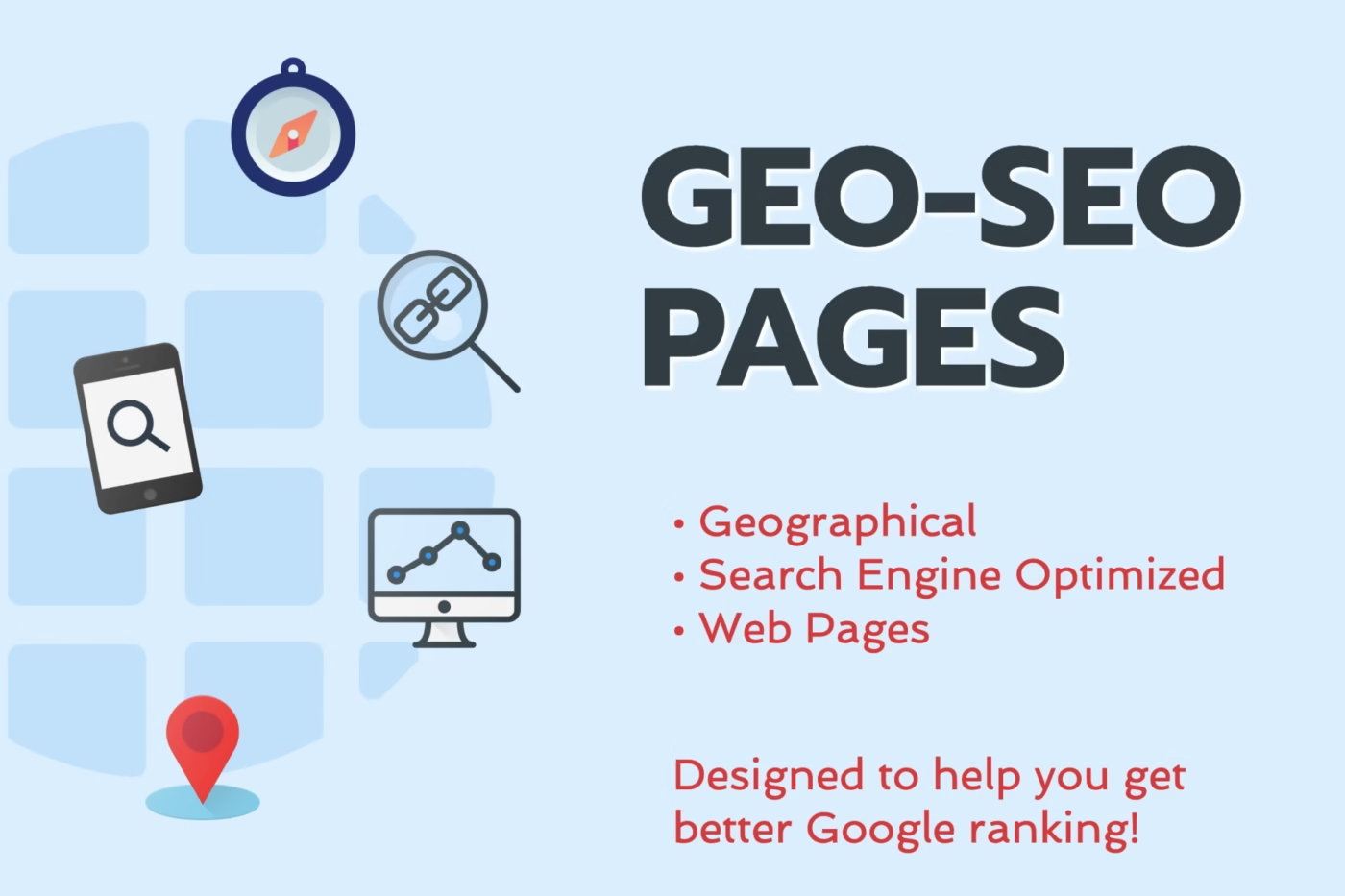
GEO Page
Complete SEO Page Analysis Guide for Higher Google Rankings
A comprehensive SEO GEO page analysis helps identify the issues preventing your website from ranking higher in search engines. This guide covers everything from on-page SEO and technical optimization to schema markup, image SEO, and Core Web Vitals.
If you want to improve your organic traffic, increase search visibility, and boost conversions, performing a full SEO audit is essential.
What Is SEO Page Analysis?
SEO page analysis is the process of evaluating a web page to identify strengths, weaknesses, and optimization opportunities that affect search engine rankings.
A complete SEO audit examines:
- On-page SEO elements
- Content quality and keyword optimization
- Technical SEO factors
- Structured data and schema markup
- Image optimization
- Core Web Vitals performance
- JavaScript SEO compatibility
This analysis helps improve your rankings on Google and enhances user experience.
Step 1: Fetch and Analyze the Page
The first step in any SEO page audit is retrieving the full HTML of the page.
Key checks include:
- HTTP status code validation
- Redirect chain analysis
- Initial page load behavior
- JavaScript rendering issues
- Crawlability and indexability
A successful SEO-friendly page should return a 200 HTTP status code without unnecessary redirects.
On-Page SEO Checklist
Optimize the Title Tag
Your title tag is one of the most important ranking factors.
Best practices:
- Keep titles between 50–60 characters
- Include the primary keyword naturally
- Make every title unique
- Improve click-through rate with compelling wording
Example:
SEO GEO Page Analysis: Complete Website Audit Guide
Write a High-Converting Meta Description
Meta descriptions influence click-through rates from search results.
SEO recommendations:
- 150–160 characters long
- Include target keywords
- Use persuasive language
- Clearly explain page value
Example:
“Run a complete SEO page analysis to improve rankings, fix technical issues, optimize content, and boost Core Web Vitals performance.”
Use Proper Heading Structure
Heading hierarchy helps both users and search engines understand page structure.
SEO heading best practices:
- Use only one H1 tag
- Include target keywords in H1
- Structure H2–H6 logically
- Avoid skipping heading levels
Well-structured headings improve readability and featured snippet opportunities.
Create SEO-Friendly URLs
A clean URL improves usability and rankings.
Good URL example:
/seo-page-analysis-guide
Avoid:
- Long parameter strings
- Random numbers
- Unnecessary words
SEO-friendly URLs should be:
- Short
- Descriptive
- Hyphen-separated
- Keyword-focused
Internal Linking Strategy
Internal links help distribute authority across your website and improve crawlability.
Best practices:
- Link to related articles
- Use descriptive anchor text
- Avoid orphan pages
- Prioritize high-value pages
Strong internal linking improves indexing and user engagement.
External Links and Authority Signals
Linking to trusted sources can improve content credibility and E-E-A-T signals.
Use external links for:
- Research references
- Statistics
- Industry standards
- Official documentation
Avoid excessive outbound links that dilute page authority.
Content Quality Optimization
Recommended Word Count by Page Type
Google rewards comprehensive, valuable content.
Suggested minimums:
- Homepage: 500+ words
- Service pages: 800+ words
- Blog posts: 1,500+ words
- Product pages: 300–400 words
- Location pages: 500–600 words
Long-form SEO content generally performs better for competitive keywords.
Improve Readability for SEO
Content should be easy to understand and scan.
Target:
- Flesch Reading Ease score between 60–70
- Short paragraphs
- Clear sentences
- Bullet points and lists
Readable content increases dwell time and user satisfaction.
Keyword Optimization and Semantic SEO
Modern SEO requires natural keyword placement and semantic relevance.
Best practices:
- Maintain keyword density around 1–3%
- Use related phrases and synonyms
- Include long-tail keywords
- Avoid keyword stuffing
Examples of semantic keywords:
- technical SEO audit
- website SEO checker
- Google ranking factors
- page optimization checklist
Build E-E-A-T Signals
Google values Experience, Expertise, Authority, and Trustworthiness.
Improve E-E-A-T by including:
- Author bios
- Industry credentials
- First-hand experience
- Trust signals
- Accurate references
High E-E-A-T is especially important for competitive industries.
Keep Content Fresh
Updated content performs better in search results.
Recommendations:
- Display publication dates
- Show “Last Updated” timestamps
- Refresh outdated statistics
- Update screenshots and examples regularly
Fresh content improves relevance and ranking stability.
Technical SEO Audit Checklist
Canonical Tags
Canonical tags prevent duplicate content issues.
Every page should include:
- A valid canonical URL
- Self-referencing canonical tags when appropriate
Incorrect canonicals can damage rankings and indexing.
Meta Robots Optimization
Ensure important pages are indexable.
Recommended settings:
index, follow
Avoid accidental:
noindexnofollow
Improper robots directives can remove pages from search results.
Open Graph and Social Sharing Tags
Social metadata improves content appearance when shared.
Important Open Graph tags:
- og:title
- og:description
- og:image
- og:url
Also include Twitter Card tags for better visibility on social platforms.
Hreflang Implementation
For multilingual websites, hreflang tags help Google serve the correct language version.
Proper hreflang implementation:
- Prevents duplicate content issues
- Improves international SEO
- Enhances regional targeting
Incorrect hreflang setup can confuse search engines.
Schema Markup Optimization
Structured data helps search engines understand your content.
Recommended schema types:
- Article schema
- BlogPosting schema
- Organization schema
- Breadcrumb schema
- Product schema
- LocalBusiness schema
JSON-LD is the preferred schema format for SEO.
Deprecated Schema Types to Avoid
Google no longer supports some schema types for rich results.
Avoid:
- HowTo schema (deprecated)
- FAQ schema for non-authoritative sites
- SpecialAnnouncement schema
Using outdated structured data can reduce SEO effectiveness.
Image SEO Best Practices
Optimize Image Alt Text
Every image should contain descriptive alt text.
Benefits:
- Improved accessibility
- Better image rankings
- Enhanced keyword relevance
Avoid keyword stuffing in alt attributes.
Compress Large Images
Large image files slow down page speed.
SEO recommendations:
- Warning for images larger than 200KB
- Critical issue above 500KB
- Use compression tools
Fast-loading images improve Core Web Vitals scores.
Use Modern Image Formats
Preferred image formats:
- WebP
- AVIF
These formats provide better compression than:
- JPEG
- PNG
Modern formats improve GEO page performance and SEO.
Prevent Layout Shift
Always define:
- Width attributes
- Height attributes
This reduces cumulative layout shift (CLS) and improves user experience.
Enable Lazy Loading
Use:
loading="lazy"
Lazy loading improves page speed by delaying offscreen image loading.
Core Web Vitals SEO Analysis
Core Web Vitals are important Google ranking signals.
Largest Contentful Paint (LCP)
Common LCP issues:
- Large hero images
- Render-blocking CSS
- Slow servers
Target:
- Under 2.5 seconds
Interaction to Next Paint (INP)
INP measures responsiveness.
Problems include:
- Heavy JavaScript
- Synchronous scripts
- Third-party code bloat
Use async and defer attributes whenever possible.
Cumulative Layout Shift (CLS)
CLS measures visual stability.
Common causes:
- Missing image dimensions
- Dynamic ads
- Injected content
Lower CLS improves user experience and rankings.
JavaScript SEO Best Practices
Search engines must access important content in raw HTML.
Key checks:
- Is content server-side rendered?
- Are title tags visible without JavaScript?
- Are canonical tags injected dynamically?
- Does the page rely entirely on client-side rendering?
SSR and SSG frameworks generally perform better for SEO than CSR-only websites.
SEO Audit Scorecard Example
Overall SEO Score: 85/100
| Category | Score |
|---|---|
| On-Page SEO | 90/100 |
| Content Quality | 88/100 |
| Technical SEO | 82/100 |
| Schema Markup | 75/100 |
| Image Optimization | 80/100 |
SEO Issues Priority Framework
Critical Issues
- Pages blocked from indexing
- Missing canonical tags
- Broken redirects
- Server errors
High Priority
- Missing title tags
- Poor Core Web Vitals
- Duplicate content
Medium Priority
- Weak internal linking
- Missing alt text
- Thin content
Low Priority
- Minor readability issues
- Metadata length adjustments
Quick SEO Wins for Faster Rankings
- Improve title tags and meta descriptions
- Compress oversized images and use WebP
- Add structured data and internal links
These changes can often deliver measurable ranking improvements quickly.
Final Thoughts
A detailed SEO GEO page analysis helps uncover technical issues, content gaps, and optimization opportunities that directly impact Google rankings.
By improving:
- On-page SEO
- Technical SEO
- Schema markup
- Image optimization
- Core Web Vitals
You can increase organic traffic, improve user experience, and build long-term search visibility.
Consistent SEO audits are essential for maintaining high rankings in competitive search results.
Related Articles
Era24UK Top Ranked Online 5 Star Rated SEO Agency Slough
Warning: Undefined variable $taxonomy in /home/fastxconew/public_html/era24.fastx.co.uk/wp-content/themes/bw-digiflow/bzotech-templates/posts/grid/grid-style2.php on line 50

SEO Agency – 5 Star Rated SEO Agency – Digital Marketing Services
Warning: Undefined variable $taxonomy in /home/fastxconew/public_html/era24.fastx.co.uk/wp-content/themes/bw-digiflow/bzotech-templates/posts/grid/grid-style2.php on line 50

GEO Audit
Warning: Undefined variable $taxonomy in /home/fastxconew/public_html/era24.fastx.co.uk/wp-content/themes/bw-digiflow/bzotech-templates/posts/grid/grid-style2.php on line 50







Leave a comment